

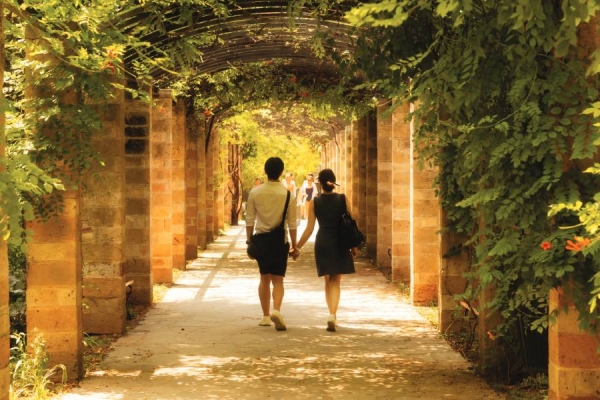
In the midst of Athens’ vibrant urban landscape, the city’s green spaces offer peaceful havens for locals seeking respite from the bustling crowds. These serene gardens, scattered throughout the city, are not only places of relaxation, but also bear witness to history, blending natural beauty with remnants of ancient ruins. Large or small, Athens' gardens offer ample room for diverse activities, providing a much-needed escape from the intense Mediterranean heat and the city's fast pace.
Zappeion Garden
Zappeion Garden holds a special place in the hearts of many Athenians, evoking cherished childhood memories. Surrounding the neoclassical Zappeion Megaron –a grand hall originally built for the first modern Olympic Games and now hosting exhibitions, conferences and major events– the garden offers a peaceful retreat in the city center. On weekends, its broad, sand-colored paths come alive with the laughter of children and the chatter of old friends meeting at the on-site restaurant and café. Scattered throughout the grounds are twenty-three marble statues, adding a touch of classical charm to the serene setting.
Diomidous Botanical Gardens
Home to more than 2,500 species of native and exotic plants, the Diomidous Botanical Gardens is the largest of its kind in Greece and the Eastern Mediterranean. This expansive green space attracts a diverse array of visitors, from plant enthusiasts drawn by its conservation efforts and educational programs, to history lovers captivated by its botanically significant species, such as the evergreen Laurus nobilis (Apollo’s sacred laurel) and Paliurus aculeatus (believed to have been used in the crown of thorns worn by Jesus before the crucifixion). It is a sanctuary where nature, mythology and science beautifully intertwine.
The Presidential Mansion
Surrounding the official residence of the President of the Hellenic Republic lies a garden of quiet beauty and historical depth. Visitors are warmly welcomed by courteous staff, who guide them gently through the security process – an experience that never disturbs the serenity of the setting. Once the Royal Palace’s vegetable garden, it was transformed into an ornamental landscape in 1897 by architect Ernst Ziller, coinciding with the creation of Herod Atticus Street.
Today, the garden offers a tranquil haven of harmony and grace: symmetrical lawns, seasonal floral islets and a grand marble staircase create a scene of refined elegance. Hidden among the trees is a remarkable open-air sculpture gallery, featuring works by Natalia Mela, Giorgos Zongolopoulos, Kostas Varotsos, Theodoros Papagiannis and Yannis Pappas. Even in the presence of many, the atmosphere remains hushed and reverent – everyone moves gently, speaks softly, as if the space itself inspires a sense of bygone nobility and quiet reflection. The garden is open to the public every Sunday, from 10:00 to 16:00
2 Vassileos Georgiou B' Ave.
The National Garden
Once known as the Royal Garden, the National Garden is a landmark green space in Athens with deep historical roots. Established in the 19th century by Queen Amalia, it remains one of the city’s largest and most beloved parks. Within its tranquil grounds, visitors will find charming fishponds, winding gravel paths, a children’s playground, a small zoo, and a Botanical Museum showcasing a diverse array of plant species. Ideal for a relaxing late-afternoon stroll, the garden also offers a scenic shortcut between the Panathenaic Stadium and Syntagma Square, perfect for those short on time.
Lycabettus Hill
Rising above the city like a natural lookout, Lycabettus Hill offers sweeping, unforgettable views of Athens, views that stretch across the iconic Acropolis to the tranquil expanse of the Saronic Gulf. Though the climb to .the summit can be demanding, the reward is well worth the effort. For those who prefer a gentler ascent, a car or the Lycabettus Funicular Railway offers a comfortable alternative. At the top, discover the charming whitewashed chapel of Saint George, a serene architectural jewel that crowns the hilltop. As the day fades, settle in at the renowned Orizontes restaurant or one of the hill’s many bars and cafés to take in a spectacular sunset over the shimmering Aegean Sea -an experience that lingers long after the sun dips below the horizon.
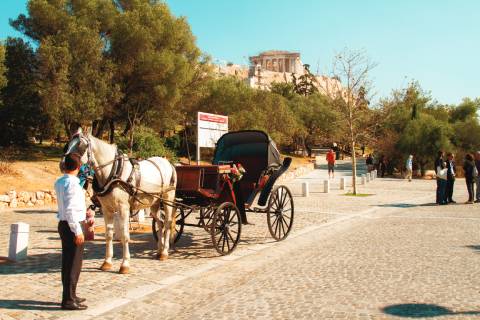
Once known as the Hill of the Muses, it was believed to inspire artistic and intellectual creativity. In ancient times, figures such as Aristides and Pericles addressed the people from its summit. In 116 A.D., a striking monument was erected in honor of Gaius Julius Antiochus Philopappos, a Roman prince and exile who left a lasting mark on the city. Today, the hill remains a serene green space, easily reached from the Acropolis or Thissio metro stations, offering sweeping vistas. The hill is dotted with remarkable landmarks, including the National Observatory, the open-air Dora Stratou Theater, the legendary Socrates Prison and the elegant Church of Agia Marina, making it a destination rich in both natural beauty and cultural heritage.
Stavros Niarchos Foundation Cultural Center (SNFCC)
The Stavros Niarchos Foundation Cultural Center (SNFCC) presents a striking contrast to much of Athens’ classical architecture, offering a modern and vibrant space for visitors. Particularly appealing to families with young children, the Stavros Niarchos Garden is beautifully organized and filled with contemporary amenities. It features a sensory garden, thoughtfully designed playgrounds and interactive water jets that invite playful exploration. Beyond its family-friendly appeal, the park also caters to sports enthusiasts, with numerous facilities and plenty of space for runners. The SNFCC park is perfectly situated near other major attractions, such as the captivating dancing fountains at the canal and the "Lighthouse", an observation point offering sweeping views of the city.
Garden of the Athens Concert Hall
A verdant oasis in the heart of the city, the Garden of the Athens Concert Hall (Megaron) offers more than just a break from the Athenian heat; it’s a cultural retreat. With its manicured lawns and open-air exhibits, the garden regularly hosts musical performances, poetry readings, and jazz evenings. Its close proximity to the Dexameni outdoor cinema has made it a favorite summer destination for both locals and visitors seeking a blend of nature, art, and relaxation.
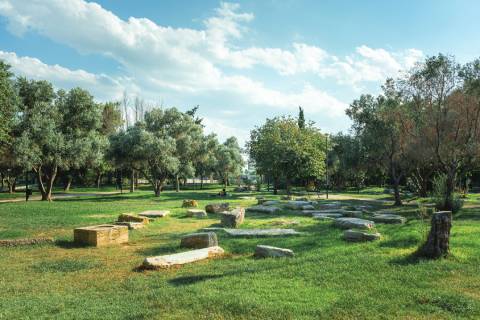
Founded by Plato in 387 B.C., the Academy once stood as the cradle of Western philosophy. Today, the site retains echoes of its intellectual legacy through its peaceful walking paths and scattered archaeological ruins. Though now a beloved spot for strolls and picnics, the spirit of philosophical inquiry endures through occasional art exhibitions, philosophy workshops, and the innovative Digital Museum located at the heart of the park.
Pedion tou Areos
Pedion tou Areos is a green haven filled with wildlife and monuments dedicated to the heroes of the Greek War of Independence. Its long, winding stone pathways, lined with trees, make it an ideal spot for both leisurely strolls and invigorating runs. However, due to its proximity to Omonia Square, it is recommended to visit during the day, as the area can be less safe after dark.
Black Duck Garden
Nestled in the heart of Athens, just off Klafthmonos Square, Black Duck Garden is a hidden gem offering a unique glimpse into the city’s historical and natural beauty. The garden’s origins trace back to 1836, when Queen Amalia transformed the area surrounding their residence into Athens’ first public garden. Today, Black Duck Garden offers more than just historical significance. It provides a peaceful escape from the hustle and bustle of the city. Surrounded by lush greenery, it’s the perfect place to unwind with a delicious brunch or drink. The serene atmosphere makes it a must-visit for anyone seeking a moment of tranquility. Adjacent to the garden is the Athens City Museum, another fascinating stop. Housed in a building that once belonged to Stamatios Dekozis Vouros, the museum showcases a collection of intriguing historical artifacts.
5-7 Ioannou Paparrigopoulou Str.