


Coastal escapes, city loops, mountain climbs and after-dark routes: the Greek capital at riding place
By A.V. Team
Photo by Alexandros Giannakakis / Unsplash
Forget hurried sightseeing and crowded public transport. Athens is a city that rewards curiosity and cycling offers one of the most engaging ways to experience it. Beyond the ancient landmarks and busy avenues lies a landscape of coastal roads, hidden neighborhoods, lively squares and mountain trails, all unfolding beautifully on two wheels. To explore Athens by bicycle is to move through its many layers at the perfect pace; close enough to notice every detail, yet free enough to wander.
The City Route
Encircling the Acropolis, this route follows the broad, tree-shaded promenade of Dionysiou Areopagitou, one of the most pleasant and accessible cycling paths in Athens. Designed with pedestrians and cyclists in mind, it offers a leisurely ride through the city’s historic heart. As you move through Plaka, Monastiraki, Thissio, and Koukaki, with a gentle detour past the National Garden, Athens reveals itself in layers. Ancient Greek and Roman ruins emerge beside lively cafés, neoclassical facades and bustling contemporary streets, creating a striking dialogue between past and present. The route forms part of the “Megalos Peripatos” (Grand Walk), a 6.8 kilometer network connecting many of the city’s most important archaeological landmarks and cultural sites.
The Coastal Route
For cyclists craving a more ambitious escape, the ride to the Temple of Poseidonat Cape Sounion offers one of the most unforgettable routes in the Athens Riviera. Stretching roughly 52 kilometers along the coast, this journey combines endurance, sea air and sweeping landscapes in a ride that feels as cinematic as it does exhilarating. The road unfolds beside the shimmering waters of the Saronic Gulf, its smooth asphalt guiding riders past hidden coves, elegant seaside suburbs and endless blue horizons before arriving at the dramatic ruins of the ancient temple perched above the sea. Though the terrain is largely gentle, with only a handful of rolling inclines, the distance itself makes the route best suited to experienced cyclists or those ready for a full-day adventure. For a more relaxed version of the experience, the ride can easily be shortened with a turnaround stop at one of the coastal towns or beaches along the way – Vouliagmeni, Lagonisi and Anavyssos, all make idyllic pauses.
The Aesthetic Route
Starting from Thissio Metro Station, this route traces Athens’ longest dedicated bike lane, a 7 kilometer stretch that cuts through some of the city’s most vibrant and evolving neighborhoods. Following Ermou Street, the ride moves through Petralona, Kallithea, Tavros and Moschato, revealing a side of Athens where everyday urban life meets pockets of unexpected beauty. The journey reaches its most striking moment at the Stavros Niarchos Foundation Cultural Center, where the city suddenly gives way to open skies and the sea beyond. Surrounded by olive trees, lavender gardens and expansive green spaces, the area offers a refreshing contrast to the dense cityscape, often softened by the salty breeze drifting in from the coast. Along the route, riders also cross over the concealed Ilissos River, an almost forgotten thread of ancient Athens flowing quietly beneath the modern metropolis. From here, you can choose to linger by the waterfront or continue cycling along the Athens Riviera. The seaside promenade carries you through Paleo Faliro and Alimos before arriving in Glyfada, the capital’s cosmopolitan coastal playground. Throughout the ride, the route weaves together contemporary culture, seaside calm and the understated charm of Athens’ residential neighborhoods, creating an experience that feels both dynamic and quietly cinematic.
The Mountain Route
For those drawn to steeper climbs and wilder terrain, Athens gives way to an entirely different side of itself beyond the city streets. Just outside the urban center, a network of mountain routes offers demanding rides, dramatic scenery and the kind of physical challenge that rewards both endurance and curiosity. Mount Parnitharemains the ultimate test for many cyclists. Its long ascents and unforgiving slopes require stamina, but the landscape that awaits near the summit feels almost surreal; stark, windswept and nearly lunar in appearance. Along the way, riders encounter unexpected sights, from the mountain-top casino to the haunting remains of the abandoned sanatorium hidden among the pines. Equally beloved among experienced riders is Mount Ymittos, where rugged trails and a relentless uphill climb lead to sweeping panoramic views and moments of rare stillness above the city. The ascent may be grueling, but the immersion in nature and the sense of achievement at the top make every effort worthwhile. For those seeking the thrill of descent, Mount Penteli offers one of the most exhilarating rides in the region, with routes flowing downhill toward the beaches of Schinias through striking natural scenery. And for cyclists eager to explore the mountains at a gentler pace, the former royal estate of Tatoi provides a softer introduction to the Athenian countryside. Quiet trails weave through cypress, olive and citrus groves, creating an altogether different rhythm, peaceful, shaded and deeply atmospheric.
The Street Art Route
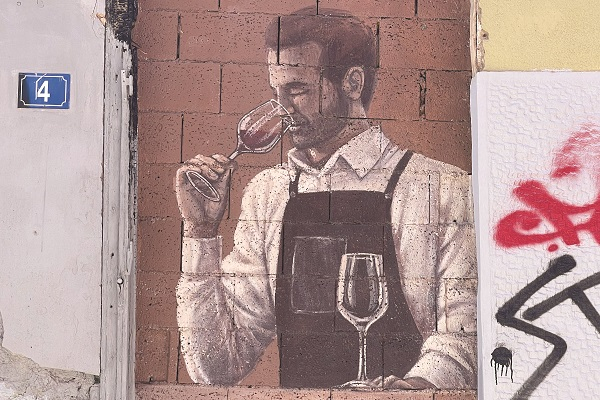
Less traditional than the city’s historical or coastal rides, this route offers a different kind of visual spectacle, one shaped not by ancient ruins or sea views, but by the restless creative pulse of contemporary Athens. Winding through hidden alleyways, side streets and overlooked corners of the city, it reveals an urban landscape layered with murals, stencil art and the unmistakable energy of Athens’ alternative cultural scene. Neighborhoods such as Psirri and Metaxourghio lie at the heart of this creative expression. Here, abandoned facades become enormous canvases and small galleries, bars and design studios contribute to a neighborhood atmosphere that feels raw and constantly evolving. Far removed from the city’s polished postcard image, these districts offer a more unfiltered encounter with modern Athens. While the route can certainly be explored independently, joining a guided cycling tour adds another dimension to the experience. Local guides often illuminate the stories, political messages and social commentary hidden within the artworks, while also helping riders navigate the city’s more hectic traffic zones with confidence. Because parts of the route pass through busy streets, it is best suited to cyclists who feel comfortable riding within an active city environment.
The Night Route
For those who prefer to escape the daytime heat and crowds, Athens after dark offers an entirely different cycling experience, cooler, quieter and undeniably atmospheric. As night falls, the city softens. Traffic eases, the marble streets begin to glow beneath the streetlights and familiar landmarks take on an almost cinematic beauty. Cycling through Athens at night reveals the city from a more intimate perspective. The illuminated Parthenon watches over the city from above, while the Acropolis and the Temple of Olympian Zeus emerge dramatically against the dark sky. Along the way, the sounds of street musicians drift through narrow alleyways, mingling with conversation, music and the hum of late-night cafés and bars. The route passes through some of Athens’ liveliest neighborhoods –Plaka, Syntagma Square and Psirri– where the city’s energy feels both spontaneous and magnetic. Tavernas remain full long after sunset, hidden courtyards come alive with music and every turn seems to offer another unexpected scene. Yet cycling Athens by night also requires confidence and awareness. Reduced visibility and the city’s occasionally chaotic layout can make navigation more demanding after dark, making this route best suited to experienced riders or those exploring alongside a knowledgeable local guide.